
Start with a clear scope.
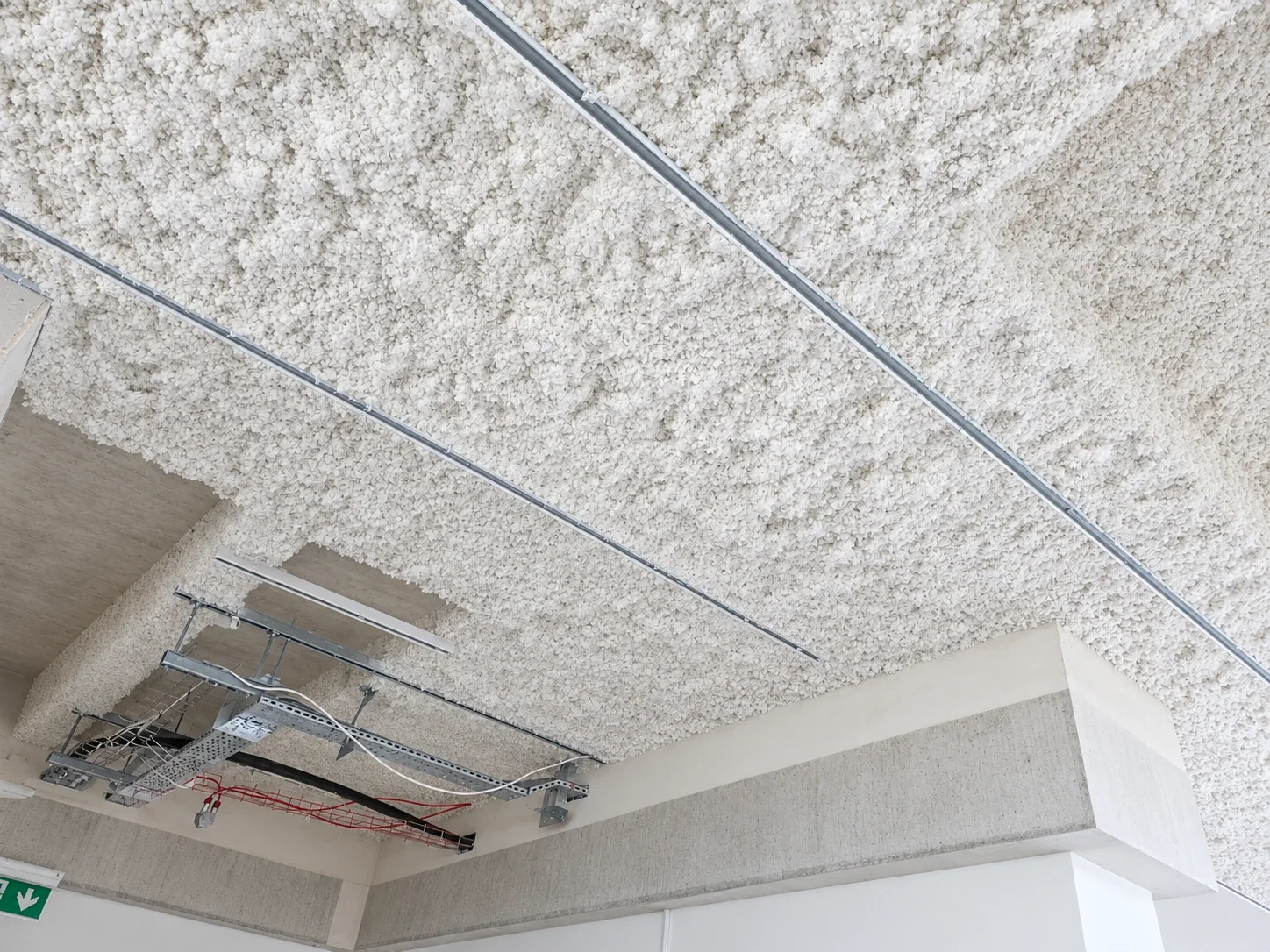
CIG Interiors provides acoustic spray as a specialist interior service. A spray-applied acoustic finish can help a design control reverberation while retaining the character of an exposed soffit or other specified surface. We start with the acoustic brief, the chosen system and the work area, not a blanket performance promise.
Scope to discuss
- Specified spray-applied acoustic finishes
- Substrate suitability and preparation scope
- Masking, protection and interfaces with exposed services
- Samples, access arrangements and agreed installation records
Keep the architectural intent
Exposed services and visible structure make the finish part of the room's appearance. Review the colour, texture and intended coverage with the design team, including what stays exposed and where the acoustic treatment stops. A representative sample helps make those boundaries clear.
Different spray systems have different substrate, thickness and application requirements. The right proposal depends on the selected product, its technical information and the project conditions.
Coordinate the spray package with other trades
Clarify who prepares the background, which services are already installed, how adjacent finishes will be protected and when the area can be released for spraying. Reach, access equipment and working around existing installations all affect the package.
The programme should allow the manufacturer's required application and drying conditions. Agree access restrictions, inspection points and the route for any later touch-ups or repairs before following trades return.
Keep acoustic and fire claims separate
The acoustic design should state the required room performance and treatment area. Sound absorption, sound insulation and fire performance describe different things. A product's reaction-to-fire classification must not be confused with a fire-resistance rating for an element of construction.
At handover, agree the product reference, inspection information and care instructions required. Product-specific performance figures or approved-installer claims belong on the site only when the supporting evidence and the exact system are confirmed.
Questions about this package
Is acoustic spray intumescent fire-protection paint?
No. The service described here is sound-absorbing acoustic treatment. Structural fire protection and fire stopping are separate scopes and must not be inferred from an acoustic finish.
Can the finish be used on an exposed soffit?
That depends on the substrate, the chosen system and the design. Send photographs, soffit information, service layouts and the manufacturer's specification for review.
Does a thicker finish always solve the acoustic problem?
The required treatment must follow the acoustic design and system evidence. Area, room geometry and the other surfaces matter as well; no universal thickness or rating is promised.
Can we nominate a colour or texture?
Send the intended finish and sample requirements. Available finishes, application and future maintenance depend on the chosen product.
Where we work
Drylining and specialist interior packages across the South West, South Wales and the M4 corridor, including Reading, Oxford, Southampton and London.